


Project Details
TUR Project 25 01
Project Description
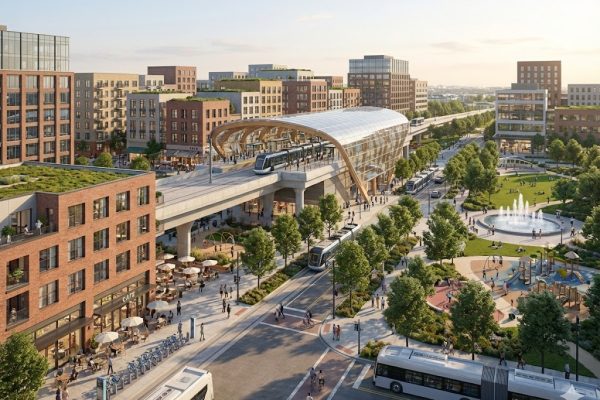
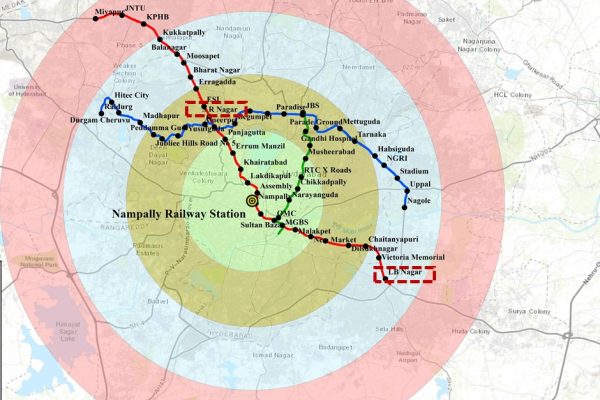
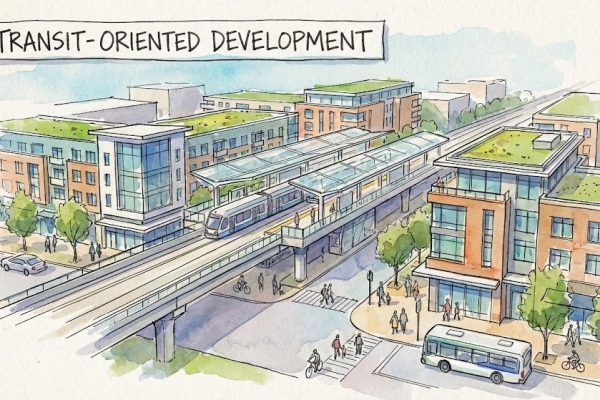
Preparation of Local Area Plan (LAP) incorporating Transit Oriented Development (TOD) for two stations of Hyderabad Metro Rail
(TUR_25_01)

Complete Street and Universal Accessibility

Development Control Regulations

Public Realm Enhancement

Vibrant and Sustainable Neighbourhoods
Rapid urban growth in Hyderabad has intensified development pressures around metro corridors, creating rising mobility demands and the need for more efficient land-use planning. Transit-Oriented Development (TOD) offers a strategic planning solution that integrates high-density, mixed-use, pedestrian-first urban environments around mass transit stations. This project focuses on preparing a Local Area Plan (LAP) for selected metro station influence zones (approx. 500–800 m buffer) to promote compact development, improve accessibility, and reduce private vehicle dependency. A detailed baseline assessment will be carried out, including land use mapping, built-form analysis, infrastructure audits, socio-economic profiling, and multimodal mobility evaluations.
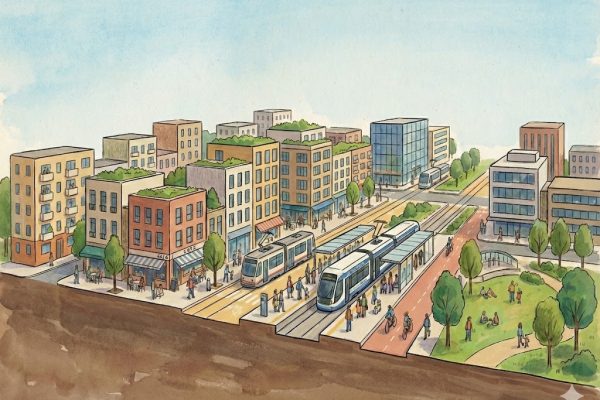
The LAP will introduce spatial and regulatory frameworks, such as revised Development Control Regulations (DCR), higher FSI utilization, complete street concepts, and universal accessibility enhancements. Parking management strategies and first-last-mile connectivity improvements will enable seamless commuter movement. The study will also integrate phased implementation strategies to strengthen financing and governance frameworks. Through this initiative, the project aims to transform metro influence districts into vibrant, connected, and sustainable urban precincts, supporting the Government in shaping a resilient transit-oriented future for Hyderabad.
A-CUPCB-SPAV
Project Benefits
Evolving a Local Area Plan with Transit-Oriented Development shall accomplish the following —
• Urban Transformation: Compact, people-centric development near transit, ensuring walkable and vibrant neighborhoods.
• Enhanced Connectivity: Seamless first- and last-mile access to transit with high-quality pedestrian & NMT infrastructure.
• Reduced Congestion: Lower private vehicle dependency leading to improved traffic and reduced emissions.
• Economic Value Creation: Land value capture mechanisms supporting infrastructure funding and redevelopment.
• Equitable Access: Inclusive housing and public amenities benefiting diverse user groups and communities.
• Policy Strengthening: Spatial and regulatory frameworks enabling sustainable, transit-aligned growth.
• Climate-Responsive Urbanism: Encouraging green mobility and reduced environmental impacts.
