


Project Details
Advocacy Research Project 3
Advocacy Project Description
Urban Mobility Challenges and Solutions: Addressing Congestion and Public Transport
Project Code: ADVR_25_03

Research

Outreach

Engagement

Impact
ACUPCB-SPAV has initiated an advocacy research project as per directions of MoHUA Govt of India in the month of July 2025 which focuses on techniques and solutions to address issues of urban congestion and public transport. The outcome shall be reports based on 2 cities of India which showcases methods of how to address issues of urban congestion and public transport efficiency in a rational and empirical manner. The reports shall be ready reckoners for urban traffic managers and transport planners in Indian cities.
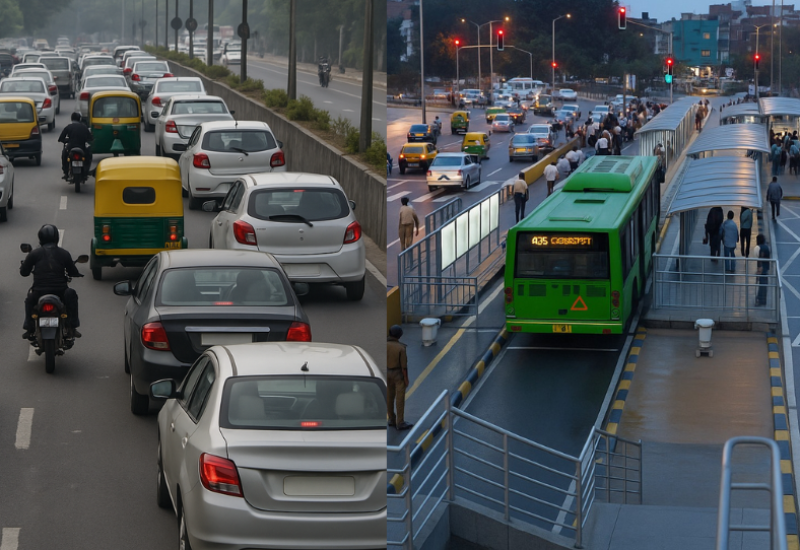
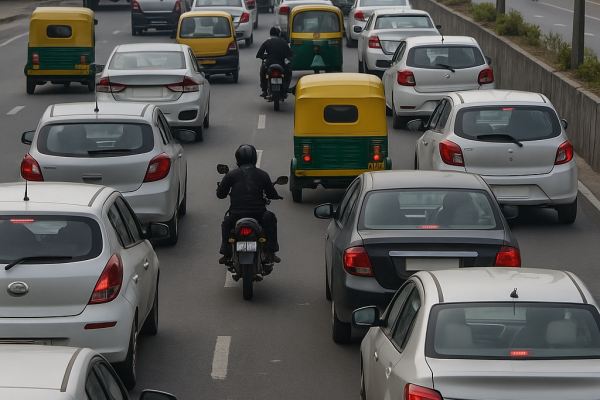
Indian cities are undergoing rapid growth, yet their mobility systems are increasingly strained by rising vehicular populations, fragmented networks, and underperforming public transport services. Congestion now imposes heavy economic, environmental, and social costs, reducing productivity, worsening air quality, and eroding quality of life. At the same time, public bus systems—central to affordable and sustainable mobility—struggle with operational inefficiencies, outdated infrastructure, and limited financial viability, leaving commuters with few reliable alternatives.
This advocacy research is structured into two comprehensive volumes to address urban mobility issues.
Volume I: Urban Mobility Challenges and Traffic Congestion
Volume II: Public Transport Systems Challenges and Solutions
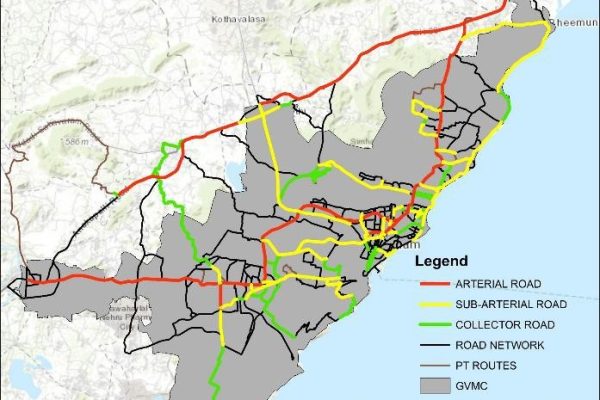
The first volume focuses on understanding the dynamics of congestion in fast-growing Indian cities, with case studies of Visakhapatnam and Vijayawada. It examines global and national mobility challenges, spatial growth impacts, vehicular rise, and congestion indicators such as speed, delay, and volume metrics. Through situational assessments and stakeholder consultations, this volume identifies congestion hotspots, their micro and macro causes, and proposes integrated solutions ranging from infrastructure interventions and ITS deployment to demand management, congestion pricing, and green financing.
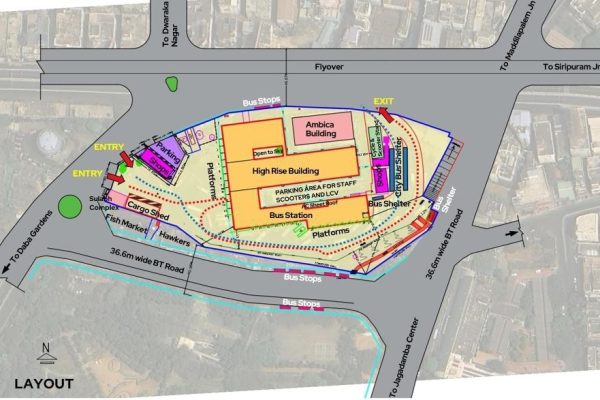
The second volume focuses on the operational and infrastructural dimensions of public bus systems, particularly in Visakhapatnam. It evaluates service design, depot and terminal infrastructure, ridership demand, user perceptions, and economic sustainability. The report identifies inefficiencies, accessibility gaps, and modernization needs, while also suggesting strategic reforms such as route rationalization, MaaS integration, electrification, ICT-based upgrades, and gender-sensitive design.
Together, the two volumes aim to provide policymakers, planners, and urban local bodies with a holistic roadmap for reducing congestion and enhancing sustainable public transport systems in Indian cities.
